Alabama
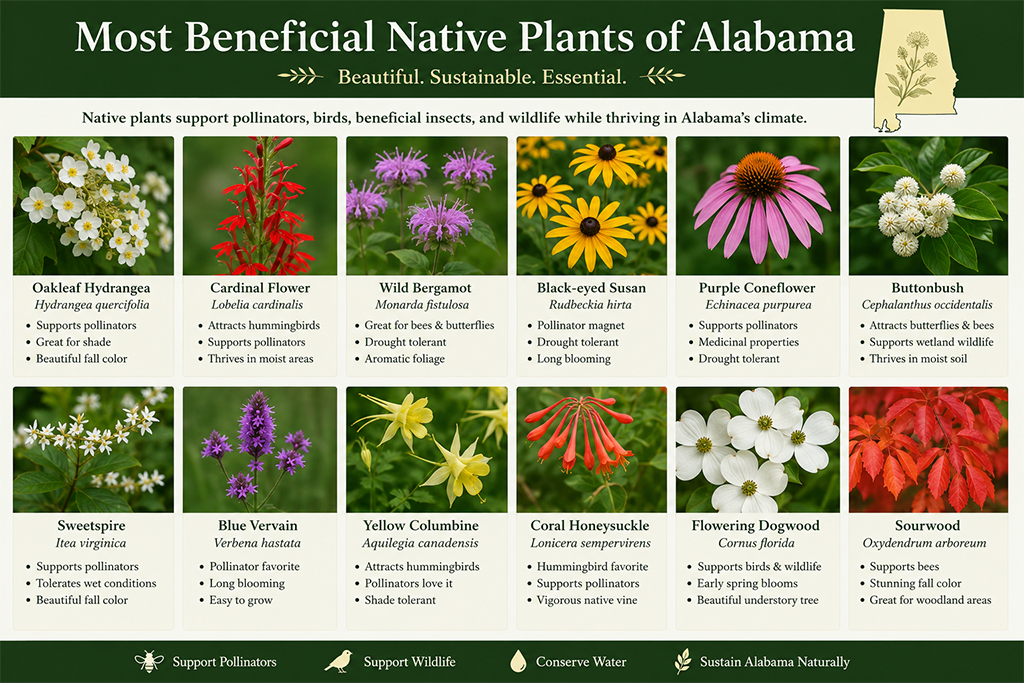
Alabama sits in a rich transition zone between the Southeast’s coastal plains and upland forests, which means native plants here can support a huge range of pollinators, birds, and soil health. The most beneficial species tend to do at least one of three things well: support pollinators (especially bees and butterflies), stabilize soil in heat and heavy rain, or provide wildlife food and shelter.
Ready to dig deeper into the native plants for your neighborhood?
Explore your local ecosystem with Easyscape, a powerful tool that identifies plants native to your exact location and helps you discover species that thrive naturally in your area's unique climate and conditions. Easyscape provides personalized native plant recommendations, drought-tolerant options, and detailed plant profiles, making it easier than ever to create a beautiful, low-maintenance, and wildlife-friendly landscape. Click on the button below to view more information.

Helpful Native Plant Resources
- Ecological Introduction
- Why is Reducing Your Lawn a Good Thing?
- Reasons to Plant Native Plants
- What are Soft Landings?
- Why Leave the Leaves?
- Best Practices for Communicating with HOAs
- EcoRegion vs Plant Zone Maps
- Consider Signage in your Yard
Visit Native Plant Resources Near You
Recreative Natives is a small, woman-owned nursery in Cropwell, AL specializing in plants native to Alabama. Jessica Thompson has been working with plants native to the Southeast and the Peidmont region for over 15 years. Her love of native plants started in my own back yard with a Yellow Passion Vine I could not eradicate. Despite my own efforts, 100 Gulf Fritillary caterpillars devoured it late that summer. And I was fascinated. Hooked, you could say. I read all about them, and in doing so stumbled upon Doug Tallamy’s newly published book. It was life changing and has changed my career twice. As a ...