EcoRegions versus Planting Zones
Ecoregions vs. Planting Zones is a key distinction to understand—especially for native plants, landscaping, and habitat restoration.
Understanding the USDA Hardiness Zones (Planting Zones)
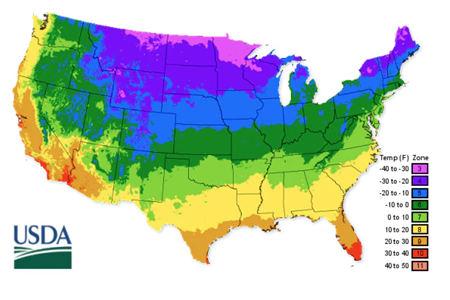 Planting zones are based on average annual minimum winter temperatures.
Their main purpose is to answer: “Will this plant survive the winter here?”
If a plant tag says Zone 6–9, it means the plant is generally cold-hardy enough to survive winters in those temperature ranges.
This system is mostly about cold tolerance, not whether the plant is naturally suited to your local ecosystem.
What planting zones tell you:
- Lowest winter temperatures
- Freeze tolerance
- Winter survival likelihood
What they do NOT tell you:
- Soil type
- Rainfall / moisture
- Native habitat
- Wildlife value
- Whether the plant is native to your area
Click here to view a USDA Plant Hardiness Zone Map
Understanding Ecoregions
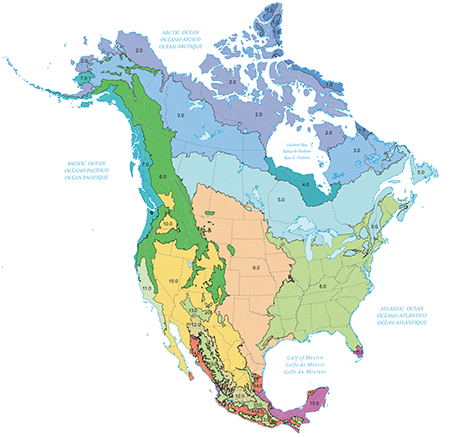 Ecoregions are much broader ecological areas based on climate, soils, geology, elevation, and native plant and animal communities.
Ecoregions answer the question: “What naturally belongs and thrives in this ecosystem?”
Ecoregions are especially useful for:
- native plant gardening
- pollinator habitats
- ecological landscaping
- restoration projects
- wildlife support
For example, two places can both be Zone 6, but one may be dry upland forest and the other a wet prairie—very different native plant communities.