The Battle Rages On..
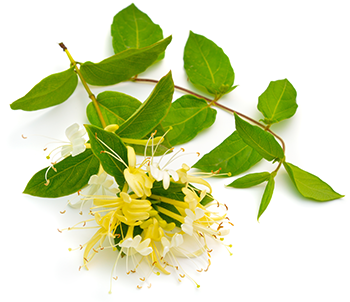 As I stepped outside into my yard in Southern Indiana the rain had passed. The morning sky was a deep blue and the cool crisp fall air filled my lungs. I instantly knew today was a good day to die, after all it was either the Japanese honeysuckle or me.
Japanese honeysuckle (Lonicera Japonica) is a perennial woody vine that spreads by seeds, underground rhizomes, and above ground runners. According to Purdue University the invasive plant is present in all 92 counties of Indiana, but more aggressive in Southern Indiana.
Japanese honeysuckle damages forest ecosystems by out competing native vegetation for light, below ground resources, and by changing forest structure. The vines overtop adjacent vegetation by twining about, and completely covering, small trees and shrubs. As it becomes established it forms a dense blanket that threatens photosynthesis for most shrubs, herbs, and trees.
At the rate the invasive Honeysuckle was taking over the long sloped bank at my house it was just a matter of time. I could envision Indiana Jones discovering my shriveled body and shrunken head wrapped tightly in an allopathic sarcophagus of Asian Honeysuckle vines. My remains would be a cautionary tale to future generations on the dangers of ignoring invasive plants. County extension agents would use me in their zoom presentations as an example of their “don’t be like this guy” gardening message about invasive plants.
After finishing my morning cup of coffee, I grabbed my trusty Corona pruning saw, round nose shovel and big grey Rubbermaid Cart and set off on my way down the road to the battlefield. As I looked back at my big grey cart while it rumbled down the road behind me I imagined it was a big “garden” tank ready for battle with the shovel handle being the heavy cannon.
The Japanese Honeysuckle had consolidated its forces along a steep bank that made regular mowing impossible. The bank was also directly below a power line which made the arrival of this and other invasive plants a common occurrence thanks to my local bird companions facing limited food options at times.
Over the past few years, I had spent my time and energy preparing gardens with native plants around my home and managing the more visible areas on my property. The invasive honeysuckle had taken advantage of this “out of side/out of mind” opportunity to move into the fields and along the old fence row.
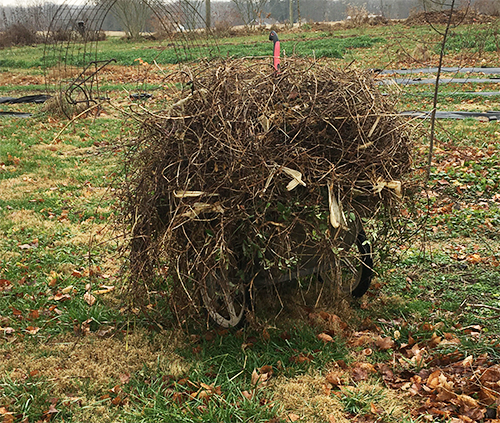 The fence row had become the base of operations for the honeysuckle as it was able to twine and run along the rusty fence and cover ground at amazing speed. The surface runners would travel without suspicion as the tall grasses of the field bent over for winter and hid the transgressions of the runner vines.
The tangle of vines and runners never knew what hit them that day. The blade of my pruning saw would catch the sunlight as it sliced through the old and new vines. Yank, pull, slice… Yank, pull, slice… Yank, pull, slice and then bundle the vines into a big knot in the garden cart. The ground was soft from the prior rain and the roots of the honeysuckle vines would often pull loose from the soil as I pulled with all my strength.
In my mind, I could hear Doug Tallamy cheering me on as I liberated new soil from the suffocating allelopathic bundle of vines. Pulling, slicing, and getting each bit of root that I could see and pulling it out of the ground. A nationwide chorus of county extension agents sang in unison of the glory of my accomplishments.
Once I had cleared an area of soil from the oppression of the honeysuckle vines I had my Showy Goldenrod seeds and other native seeds at the ready to spread liberally into the open soil. I spent hours enjoying the abundance of life on this particular Goldenrod species and I think it has the chutzpah to battle for the soil against every other seed that will germinate in the open soil.
My back ached and my hands and arms grew tired from pulling and grabbing at the unrelenting vines. I was tired but still determined to win the day, I did my best not to slice myself with the sharp steel blade of my pruning saw while I balanced on the slope and pulled and sliced through the vines.
I could see the headline in the local paper “Local Man Succumbs from Wounds in Garden Battle with Invasive Plant “. No doubt my obit would be right above the “Spring is Coming” advertisement for buy one get one free Callery Pear and Burning Bushes on sale at the local big box store.
I survived the first battle of this war with minor cuts and scrapes and some aches and pains (that would show up a day or two later), but with a sense of accomplishment and genuine satisfaction from my efforts to save the world one yard at a time.
I know the Lonicera Japonica is still present and will be back, but on that cool fall day I took back the ground and made a dent in the battle to stay ahead of the on-going threat on my own land.
Later that day, I watched as the flames and smoke filled the sky above the mountain of honeysuckle as the plant met its ultimate demise. How you like them apples… (Good Will Hunting Reference)
I encourage you to suit up, grab your gardening tools and a big cup of coffee and start your own battle to take back your land from invasive species this spring.
Sincerely
Dan

Dear Miscanthus Sinensis
Dear Miscanthus Sinensis aka Chinese silvergrass and whatever other alias your friends call you,
It all started innocently enough, a mid-summer walk through my Mother’s garden many years ago. As we walked the garden you called out to me, your upright habit, green stems and thick sheaths was something I could see in my garden.
Shovel in hand and clumps divided you are on the way to a new prime spot in my garden.
The excitement of a car trunk full of free plants was a simple joy to this beginner garden with visions of full lush garden beds dancing in my head. Details such as plant genus, species, origin and name were of little importance compared to the value of a trunkload full of free plants.
Over the first few years you stood tall in the garden showing your green culms late into the winter season, while most Indiana plants had retreated into a shade of brown or went completely dormant you continued to grow and expand.
Sure, you made me feel good about my gardening skills. After all it was due to my solid gardening practices that this grass was growing at such an impressive rate. As I divided one clump into two, then two into four and so on I was feeling good about our garden arrangement and my gardening skills.
After a few years had passed I began to doubt our garden relationship and began to question your plant biology. After all we were never officially introduced, and I didn’t even know what to call you.
I thought we understood each other, you stayed green and growing year round and I took the credit for having a green thumb during an Indiana winter. As a relative novice gardener I guess I underestimated you.
During a meadow walk on my property in this spring I grew more concerned. I noticed several clumps of you (that I didn’t plant) making room for themselves in my open meadow.
The final straw for me was a walk yesterday through my mother’s acreage. She has 80 acres of land that is mowed for hay and on a mild December day in Indiana I walked the fields. You and your Trojan Horse offspring (that I had so excitedly welcomed into my garden all those years ago) were clearly visible in numerous places throughout the open fields. You are showing your true invasive colors now.
Thanks to online help from various native plant websites and the YouTube Tutelage of people like Doug Tallamy and Dan Jaffe Wilder I am on to you and your gang of invasive thugs. Today became a day of action on my property.
Shovel in hand digging up clumps of you makes me remember how we met all those years ago. I am a more educated gardener now and I watch closely what comes into my garden. No more cultivars for me thanks anyway big box stores, just straight species plants for me in my garden.
If it doesn’t provide for or add beneficial habitat it isn’t going to be something I spend money on in the future (Please take note local nurseries in Indiana and elsewhere).
------
Dear Miscanthus,
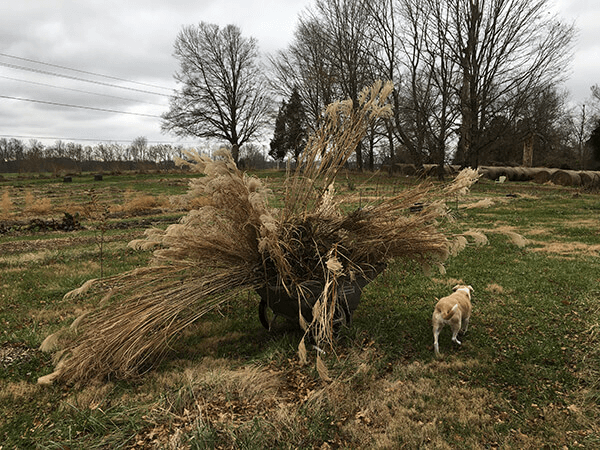 We shared some laughs and had some good times but consider this the end of our garden relationship. You were sneaky and lied to me and I found starts of you all over my yard and fields. I refuse to continue to deal with your Trojan horse manners.
I dug you (and all of your clone plants) up today and burned your tops and will watch you wither away on my mulch pile all winter long. Don’t think that I won’t be watching you in the mulch pile when spring rolls around too. I will have my eye on you in my meadow as well.
Sincerely
Dan
--------------------------------------
So from this I vow on this 13th day of December 2021
- I will be more aware of inviting stranger plants from friends and family into my garden.
- I will no longer troll the shelves of discounted plants of big box stores like Lowes and Home Depot and bring home plants of foreign origin into my garden.
- I will only buy plants from Native Plant Friendly Nurseries.
Overalls
I don’t wear them very often; when I do I always felt like a bit of a poser. Not this year
In my mind overalls are for a certain kind of farmer that almost seems like they should be on the shelves of an antique mall.
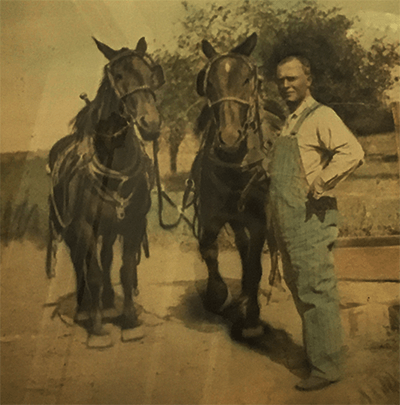 Don’t get me wrong, I have a great appreciation for that old farmer with the grey hair, baseball hat, handkerchief, pooch belly and a long list of old man jokes. Men like this built this country and put food on the table from their family gardens and sold their surplus to the nation. A pair of grubby old overalls bore witness to the toil of a farmer in those days. Shoveling dirt, walking through mud, pulling weeds, harvesting plants, working the horses and tilling the soil was a rite of passage for the farmer and his overalls. Standing, bending, kneeling, hoeing, weeding and digging was the daily life of a famer a century ago and a good pair of overalls was the most comfortable clothing available for this kind of work.
Agriculture has changed and so has the clothing. Farmers working on a modern farming enterprise don’t spend much time in the fields except from the air conditioned cabin of a $100,000 tractor. Bending, standing, and kneeling have been replaced with GIS mapping, downloading satellite data and chemical analysis. It is no wonder that the comfort of a pair of overalls is of less importance than a laptop or computer.
I guess I just wish that modern farmers wore overalls more often. If a farmer from a century ago showed up today to a modern agricultural enterprise I doubt they would recognize much.
I think they would be happy seeing me in my small garden and appreciate me trying to keep my garden weed free by bending, kneeling, shoveling and hoeing in my overalls. I think old-time farmers would be comfortable with the size of my one acre veggie garden. I think they would accept me sporting my pair of overalls in the garden and planting heirloom seeds from last year’s plants. I think they would accept me into their club of our agricultural heritage.
Those same old-time farmers I think would look with derision and some sense of pity toward how the modern farmer and the lack of independence over the seed supply, the use of endemic chemicals and the economies of scale farmers must achieve in order to turn a profit each year.
With these thoughts in mind, forward I shall go this year into my garden sporting my overalls as a gentleman farmer in my garden. I will refuse the use herbicides and pesticides in my garden, and I will be planting heirloom seeds, using animal manures and broad forking the soil, pulling weeds and harvesting crops by hand. I will know that my food comes from my work and from me bending, kneeling and touching the dirt on a daily basis and I will embrace the echoes of approval I hear in the wind from past generations of farmers welcoming me to their brotherhood.