Reasons for Signage in a Native Plant Garden
Using signage in a native plant garden is an important educational and ecological tool. Signs help visitors understand the purpose of the garden, recognize the plants, and see how the garden supports wildlife.
1. Educate Visitors
-
Identifies plant species, including common and scientific names.
-
Explains the role of each plant in the ecosystem (pollinator support, bird food, etc.).
-
Raises awareness about native plants vs. invasives and why native plants matter.
2. Highlight Wildlife Benefits
-
Shows which plants attract bees, butterflies, birds, and beneficial insects.
-
Demonstrates how the garden supports local food webs and self-sustaining ecosystems.
3. Promote Conservation Awareness
-
Encourages visitors to plant native species at home.
-
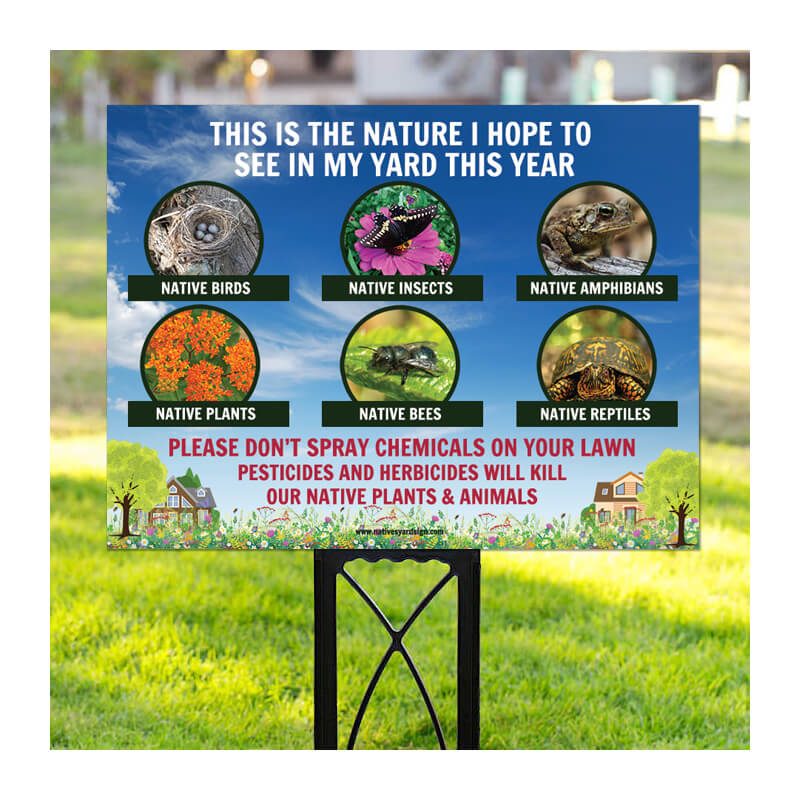
Explains how gardens help reduce pesticide use, conserve water, and support biodiversity.
 4. Enhance Visitor Experience
-
Makes the garden more interactive and engaging.
-
Helps children, students, and tourists learn while exploring.
5. Provide Practical Guidance
-
Can include tips on plant care, planting times, or ecological landscaping techniques.
-
Explains why lawns, invasive plants, or chemicals are avoided in ecological landscaping.
6. Encourage Stewardship
-
Signs show that the garden is part of a larger effort to restore native ecosystems.
-
Inspires visitors to become part of conservation efforts in their own yards or communities.
Example
A sign near a milkweed patch might say:
-
“Swamp Milkweed – Asclepias incarnata
Nectar for butterflies, host plant for monarch caterpillars, supports bees and pollinators.”
This informs and teaches visitors why the plant matters and encourages them to plant it at home.