Reduce Your Lawn
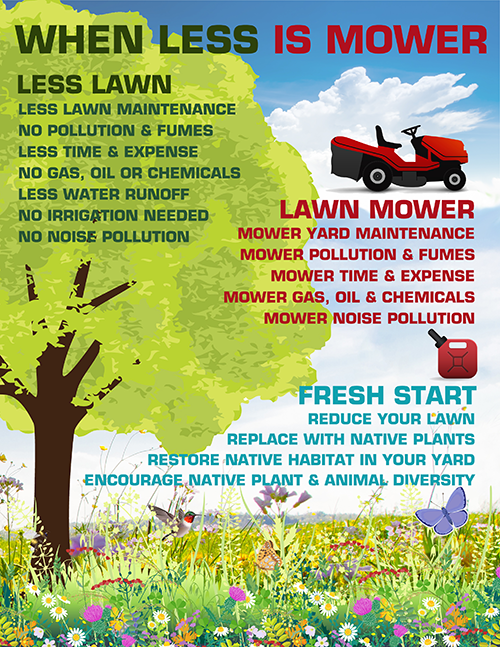
Reducing your lawn is a key practice in ecological landscaping because traditional lawns provide very little ecological value. Replacing parts of your lawn with native plants or gardens can support wildlife, improve soil health, and conserve resources.
Reasons to Reduce Your Lawn in Ecological Landscaping
 1. Support Local Wildlife
-
Lawns offer almost no food or habitat for insects, birds, or other animals.
-
Replacing lawn with native plants, wildflowers, or shrubs provides nectar, seeds, shelter, and nesting areas.
-
Helps restore local food webs, as described by Douglas W. Tallamy in Bringing Nature Home: How You Can Sustain Wildlife with Native Plants.
2. Increase Biodiversity
-
Lawns are monocultures (all one species of grass).
-
Reducing lawn space allows a mix of native species to grow, which supports more insects, birds, and soil organisms.
3. Conserve Water and Reduce Maintenance
-
Lawns often need frequent watering, mowing, and fertilizers.
-
Replacing lawn with drought-tolerant native plants saves water and reduces chemical use.
4. Prevent Pollution
-
Lawn fertilizers and pesticides can run off into streams and rivers, harming aquatic life.
-
Fewer lawns mean less chemical input and healthier soil and waterways.
5. Create Self-Supporting Ecosystems
-
Lawns rely heavily on human care.
-
Native plantings, rain gardens, or meadows can maintain themselves naturally, forming mini ecosystems that support insects, birds, and soil organisms.
Example
Instead of a 100% grass lawn:
-
Convert part of the yard into a native wildflower meadow
-
Add a rain garden to capture roof runoff
-
Plant native shrubs and trees for birds and pollinators
This not only creates a beautiful landscape but also restores ecological function.
