Maryland
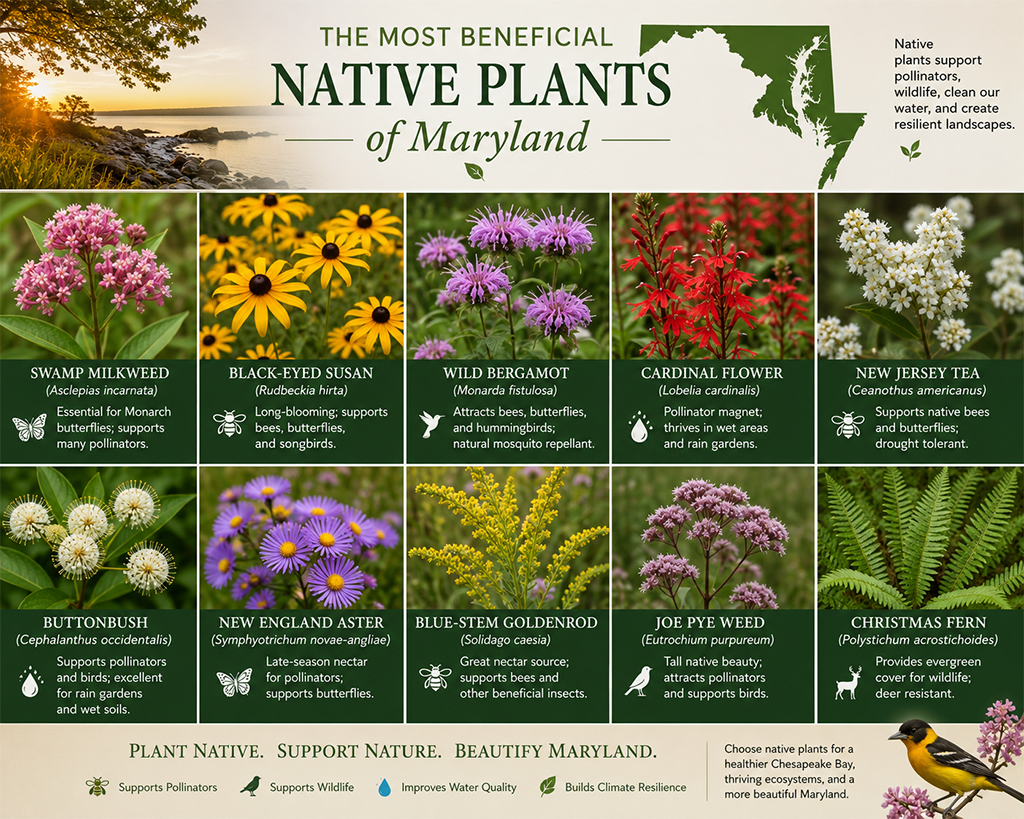
Maryland sits at a true ecological crossroads—Appalachian highlands in the west, Piedmont forests in the center, and Chesapeake Bay coastal wetlands in the east. The most beneficial native plants here are those that support pollinators, stabilize waterways feeding the Bay, and rebuild forest and wetland food webs.
Ready to dig deeper into the native plants for your neighborhood?
Explore your local ecosystem with Easyscape, a powerful tool that identifies plants native to your exact location and helps you discover species that thrive naturally in your area's unique climate and conditions. Easyscape provides personalized native plant recommendations, drought-tolerant options, and detailed plant profiles, making it easier than ever to create a beautiful, low-maintenance, and wildlife-friendly landscape. Click on the button below to view more information.

Helpful Native Plant Resources
- Ecological Introduction
- Why is Reducing Your Lawn a Good Thing?
- Reasons to Plant Native Plants
- What are Soft Landings?
- Why Leave the Leaves?
- Best Practices for Communicating with HOAs
- EcoRegion vs Plant Zone Maps
- Consider Signage in your Yard
Visit Native Plant Resources Near You
Chesapeake Natives is a non-profit organization dedicated to promoting, protecting and propagating native plants of the coastal plains and piedmont that form the Chesapeake Bay Watershed. They aim to restore home and public landscapes and park lands in this region with local ecotype native species (LENS) that best contribute to biodiversity, our best natural defense against the impacts of climate change. Local ecotypes are grown from seed with local provenance, wild seed that we seek out to gather and protect. They grow and distribute to the public a wide diversity of LENS from our volunteer-powered nursery ...